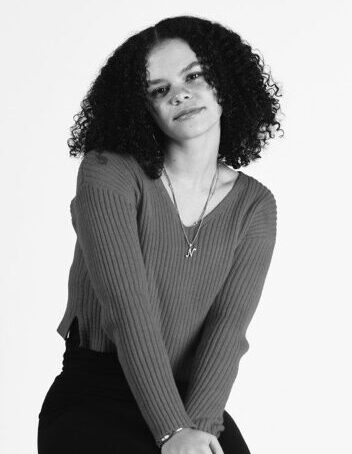
The appointment of Garrett by the company’s founder and Executive Director Sherri Young is designed to “remobilize the organization” following a series of unfortunate circumstances that included the tragic death of a lead actor in October of 2023 on the same day it was about to debut its long-planned production of Death of a Salesman, the separation from its long-time Artistic Director eight months later, and the funding scandal at the Human Rights Commission which saw a good portion of the company’s Dream Keeper funding cut pending a required reapplication, which has finally been restored
San Francisco, March 2, 2026 — Nataki Garrett has been appointed Interim Artistic Director of The African-American Shakespeare Company as the company completes the final phase of its 2025/26 season and plans for the 2026/27 season that will begin in autumn of this year. Garret’s goal is to “remobilize the organization” and guide the process of choosing its next full time Artistic Director. “The company is a national treasure, one that is capable of providing the training ground for a new generation of artists.”
Garrett for her part brings huge experience to the role, including being the first Black woman to serve as Executive Artistic Director at the vaunted Oregon Shakespeare Festival. “An Artistic Director’s vision shapes far more than programming,” says Garrett. It defines how a company engages its audience, attracts resources, and understands its purpose. At this moment, my focus is to support continuity and help align artistic direction with organizational readiness so AASC can move forward with strength and intention.”
Young reached out to Garrett for assistance and mentoring in replacing former Artistic Director L. Peter Callender when it became clear there was a need to broaden the outreach for a candidate ready to take the mantle. “I thought this was a great opportunity for both myself and the company to grow following the last four to five years of uncertainty. It has been wonderful to talk through the process with a peer. I wanted someone to help guide me through those waters, and Nataki brings so much experience navigating a variety of landscapes to the table.”
The uncertainty Young is referring to here began with Covid and getting re-established from the shut-down, when they found themselves forced to close their long-planned production of Death of a Salesman when Richard May, one of the lead actors was tragically struck and killed by a car as he walked to the final rehearsal before it was to open that evening. Eight months later saw the company separating from Callender, and then in 2024, the company found itself caught up in the scandal at the Human Rights Commission regarding the Dream Keeper funding initiative and its Executive Director Sheryl Davis. This led to the cessation of funding for a number of non-profits, including AASC. After being required to reapply from scratch, the company’s funding was approved in the late fall of 2025, with funds scheduled to be restored in the Spring of 2026.
“What I want for the company,” says Garrett, is to get an Artistic Director on board to carry that load in order to allow Sherri to orbit higher and dream out further ahead for the organization as a whole. In the end it is the art that brings audiences in. I have a long preoccupation with Shakespeare — from my earliest introduction to the work through my 2023 production of Romeo and Juliet. Shakespeare wrote for the people, and that belief shapes my relationship to language-driven theater: plays where speech becomes architecture, rhythm, argument, and revelation, and where the public can see themselves inside the poetry.”
The goal is to have a permanent Artistic Director in place by early to mid-summer of 2026.
“We have the last production of the 2025/26 season coming this May written and directed by Ted Lange, called Shakespeare Over My Shoulder,” says Young. But we are working out visions for upcoming seasons now. We have had great success with Cinderella over the years, and I feel there are not enough family shows for Black audiences, so I would love to explore classic stories from around the globe. For example, we have our eye on Anasi the Spider, as that children’s book was dear to my heart growing up. I see all possibilities with puppeteering, shadow light projections, all sorts of fun things to do with this show. Also would love to re-think and restage Oliver Twist at some point perhaps as well. And of course, all the Shakespeare and other classics we envision with color.”
About Nataki Garrett
Nataki Garrett is an award-winning artistic director and executive leader working at the intersection of art, strategy, and systems change. She is President and CEO of Ladder Leadership Inc., a global leadership development firm supporting visionary leaders in advancing transformative, values-aligned work. Garrett made history as the first Black woman Executive Artistic Director of the Oregon Shakespeare Festival, leading the $44 million institution through the Covid-19 crisis that shuttered the industry for 18 months. She co-founded the Professional Non-Profit Theater Coalition, which helped secure $15 billion in federal relief for the non-profit theater sector. Previously she was the Acting Artistic Director of the Denver Center Theatre Company and senior leadership at CalArts Theater School and The Center for New Performance. A Doris Duke Artist Award recipient and United States Artists Fellow, Garrett is a nationally recognized leader in arts and organizational transformation.
About the African-American Shakespeare Company
The award-winning African-American Shakespeare Company (AASC) was established in 1994 by professional theater artists from the American Conservatory Theatre as an alternative answer to the “Color Blind Casting” initiative that began in the early 90s. While this initiative temporarily changed the diversity on stage, African-American Shakespeare Company noticed color blind casting was ignoring these artists’ rich cultural heritage and not making the most of the dynamic, cultural vibrancy that actors of color could bring to classical works. In addition, since mainstream classical theaters often lack the ability to attract truly diverse audiences, The African-American Shakespeare Company aspires to highlight the dynamic cultural vibrancy that artists of color bring to classical productions.
The African-American Shakespeare Company’s received a Certificate of Honor from Mayor London Breed and former San Francisco Mayor and now California Governor Gavin Newsom; named “Best Live Theatre” by San Francisco Magazine in 2018; received a Jefferson Award for Public Service (Silver Recipient) in 2018; The Paine Knickerbocker Award in 2014 for Outstanding Achievement for a Theater Company by the San Francisco Bay Area Theatre Critics Circle, along with a Community Partner Award from University of San Francisco’s Leo T. McCarthy Center for outstanding collaboration in providing a quality Service-Learning program.
African-American Shakespeare Company is funded in part by; San Francisco Arts Commission; the City and County of San Francisco, Grants for the Arts, Bothin Foundation, Kimball Foundation, The Shubert Foundation, and the Highwind Foundation.
About Sherri Young, Founder & Executive Director
An M.F.A. graduate from the American Conservatory Theatre and former Commissioner for the San Francisco Art Commission proudly serving under former Mayor and now California Governor Gavin Newsom, Young founded The African-American Shakespeare in 1993 and has been its Executive Director since. She has directed sixteen productions, produced and executed four programs for the organization and speaks at various colleges, universities, and conferences across the nation. Young manages the approximately 60 company members and volunteers for the organization’s programs. Some career highlights include the creation of the company’s signature holiday performance Cinderella, effectively building and stabilizing the organization over the past twelve years as well as increasing audience attendance and new funding support by foundations and individual donors. Young’s next legacy is to acquire a performance space for the organization.